

Community First Aid
We’re working with partners and local organizations to embed emotional first aid tools, peer support systems, and postvention protocols into the places we live and work.
A Culture of Care & Community of Practice
Community First Aid (CFA) is a flexible, trauma-informed approach that equips workplaces, teams, and community spaces with the skills and systems to respond effectively to stress, burnout, and crisis. More than a one-time training, CFA fosters an ongoing culture of care, where people feel confident showing up for one another, and where support is part of everyday life.

What is CFA?
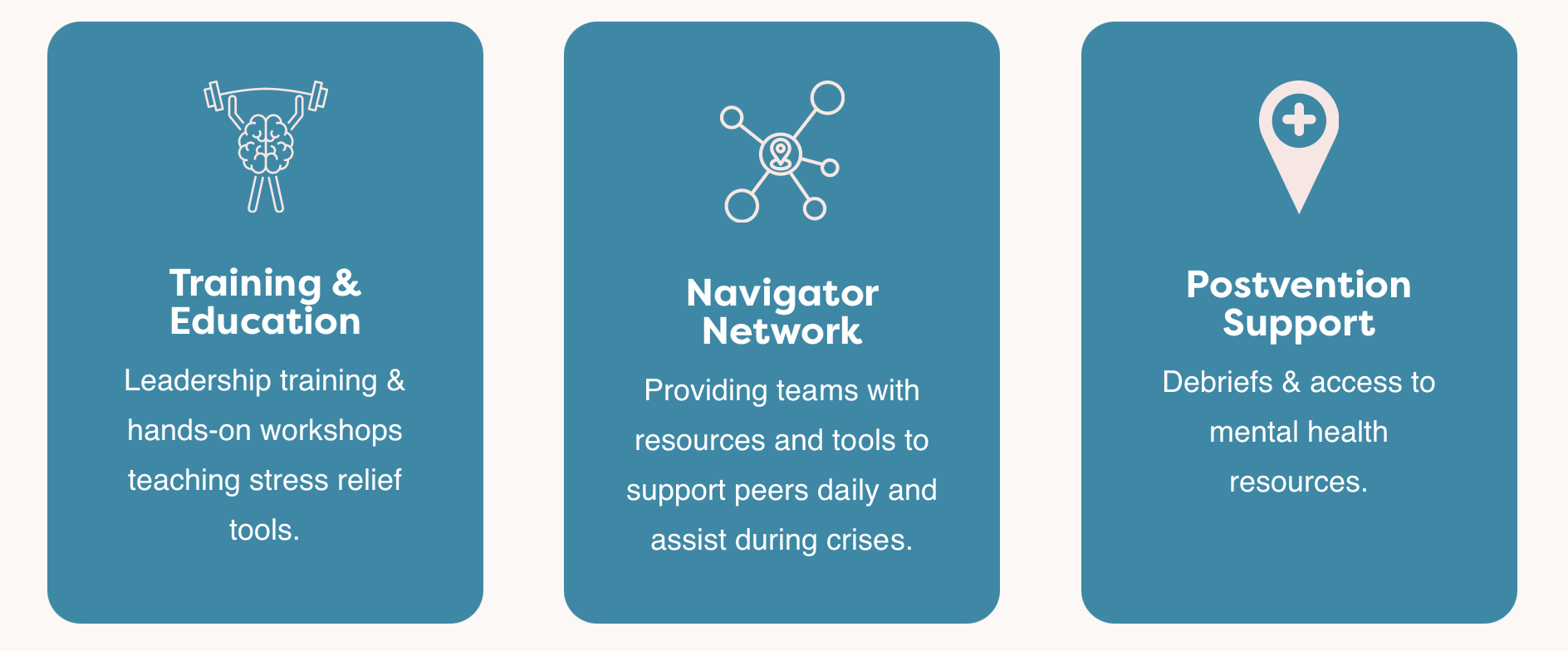
Through leadership training, interactive workshops, customized protocols, and a growing network of trained community members, we help workplaces respond to stress, conflict, and crisis with compassion and confidence, equipping people to pause, regulate, communicate, and connect others to the right support.
Approach
Community First Aid infuses evidence-based practices from healthcare, military, public health, hospitality, and community settings into a practical framework designed to cultivate a culture of care within organizational settings. Community First Aid integrates scientifically validated interventions including:
Emotional First Aid
Immediate psychological support and rapid stress mitigation
Psychological First Aid
Crisis intervention techniques
Polyvagal Theory
Neurobiological approach to stress regulation
Well-Being Science
Unlock evidence-based strategies for thriving
Applied Positive Psychology
Transform insights into actionable wellness.
Applied Positive Psychology
Structured critical incident reflection & learnin
Trauma-Informed Debrief Culture
Introduce frameworks that account for compounded stressors

Approach
Transforming Workplace Well-Being
Resort communities thrive on human connection, yet the workers who create those experiences often face intense stress, unpredictable hours, seasonal instability, and high emotional demands. Why employers should invest in well-being:
64% of workers have left roles due to burnout according to a study of 500 US hospitality front-line managers.
76% of US workers reported at least one symptom of a mental health condition, an increase of 17% in two years.
80% say their workplace stress affects their relationships and only 38% of those who know about their organization’s mental health services would feel comfortable using them.
How CFA Addresses These Challenges
Community First Aid is designed to meet the unique needs of diverse sectors including hospitality, education, and first responders by embedding peer support, emotional regulation tools, and structured referral pathways directly into the environments where people work and learn. CFA strategies align with the Surgeon General’s recommendations for workplace mental health and well-being.
Prioritize psychological safety & normalize help-seeking
Train leaders and managers to model openness, validate struggles, and remove stigma around emotional challenges.
Build Non-Clinical Peer-to-Peer Support Networks
Develop a network of trained “navigators” who can provide early, trusted, low-barrier support before a crisis happens.
Embed Connection & Belonging
Use workshops and facilitated interactions to foster inclusion, trust, and stronger relationships across levels.
Ensure People Feel they Matter & Have Voice
Encourage feedback loops and recognize contributions.
Offer Structured Postvention & Debrief Supports
After emotional or critical events, assist teams in debrief, resource referrals, and process improvement.
Train in Practical Stress Management Tools
Teach rapid stress-mitigation techniques (breathing, grounding, somatic awareness) to use in real time.
Facilitate Linking to Resources
Ensure Navigators have a referral roadmap to counseling, crisis services, or local supports.
From ski patrol units and resort staff to teachers and public safety teams, our vision for success is the same. We seek to build stronger, more connected, and more resilient workplaces that support both people and performance.
The Importance of Investing in People
The result of not is high turnover, absenteeism, and diminished service quality. These are issues that not only affect the quality of life of individuals, but also directly affect the consumer experience and business stability.